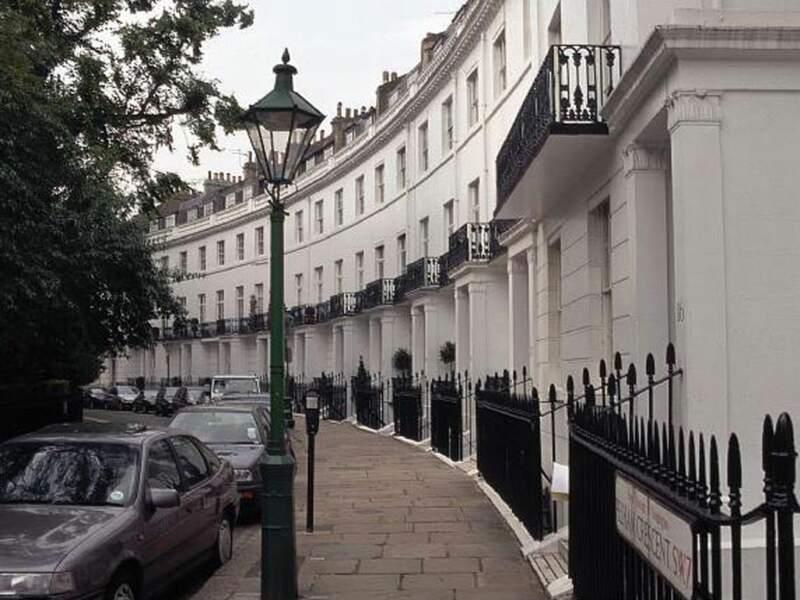
 The Victorian facades of the Chelsea district in London (Great Britain).
Over the past fifteen years, London, which has a population of nearly eight million, has undergone an unprecedented upheaval. Urban planners and architects are reclaiming the banks of the river and the eastern districts of the city. To take the measure of these changes, there is nothing like following the course of the Thames, the artery that crosses the British capital from west to west, from Chelsea to Canada Water. Following the banks of the River Thames from the Victorian quarters to the ultra-modern City is a journey through time, in a metropolis where tradition and modernity mingle and collide, and eventually merge. GEO.fr takes you on a tour of this "New London". ¤ Total distance: 12 to 13 km ¤ Total duration: ideally, spread the walk over two days so that you can do the visits. The central section (Downing Street to Tower Bridge) can be done in one day. ¤ Means of transport: walk, bus, DLR (Docklands Light Railway)STEP 1: Chelsea, the meeting place of millionairesFind our London travel guide STEP 1/12¤ To get to Chelsea: take the tube to Sloane Square (Circle Line and District Line) and join the Thames via King's Road, then Oakley Street.Once in Chelsea, on the north bank, in the south-west of London, we could use Obelix's phrase in "Asterix and the Bretons": "It's lucky to have the number. The description of the house might not have been enough. Here, in fact, the white houses and their neat gardens line up as far as the eye can see. We are looking at the traditional image of Victorian England, with the old-fashioned charm of that which does not change, or changes only slightly. Behind the white curtains of the windows, one imagines ladies of the world delicately raising their cups of tea as the clock strikes five. However, the district, one of the richest in the city, is also evolving, in its own way. In recent years, it has become a haven for several of the world's wealthiest people, attracted by favourable tax conditions. The new Russian oligarchy has notably invested in Chelsea, like Roman Abramovitch, who has owned the football club that bears the district's name since 2003, one of the best in Europe.¤ To reach Battersea Power Station: cross the Thames by Albert Bridge, one of the most beautiful in London, and follow the river through the alleys of Battersea Park (about 20 minutes).NEXT STEP: Battersea Power Station, a vestige of the industrial age

The chimneys of the Battersea Power Station, London (Great Britain).
STEP 2/12 Pink Floyd fans, welcome! Immortalised on the cover of the 'Animals' album, the ghostly silhouette of Battersea Power Station stands at the end of a derelict car park. The largest brick building in the world seems to have been placed there by chance, with its dilapidated facades, broken windows and four chimneys jutting into the sky. Built in the 1920s, this former power station has been disused since 1983. Regularly, a more or less fantastic project of rehabilitation is evoked, then fails. Londoners argue about the best way to bring this impressive vestige of the industrial era into the modern world. Meanwhile, the building decays, its agony occasionally distracted by filming (in the 1980s, Monty Python's "The Meaning of Life", Stanley Kubrick's "Full Metal Jacket", and more recently Christopher Nolan's "Batman - The Dark Knight", and Terry Gilliam's "The Imaginarium of Doctor Parnassus").¤ To get to the next stop, Vauxhall Bridge: take the 344 bus to Clapham Junction and get off at Vauxhall (about 10 minutes).NEXT STEP: Vauxhall Bridge, a change from James Bond

Vauxhall Cross, London, Great Britain.
STAGE 3/12Cinema, again. A little further on, opposite Vauxhall Bridge, one of Her Majesty's top ambassadors has his office. Not likely to be there, though. On the roof of an ultramodern building with bluish reflections, antennas and satellite dishes give a clue: this is the headquarters of MI-6, the British secret service. In "The World is Not Enough", Pierce Brosnan, aka James Bond, never lacking in exploits, leaves the building in a boat, through an opening overlooking the Thames, before taking to the brown waters of the river. Built in the early 1990s, the building symbolises the upheaval of the area. Once popular, Vauxhall was disfigured by bombing during the Second World War. Strategically located, the area has attracted grandiose housing projects. Huge luxury buildings have sprung up. Former Prime Minister John Major and Chelsea Clinton, daughter of the former US President, are said to have made St. George's Wharf their home, an architectural monster built directly opposite MI-6. Finally, a 181m high residential tower is being planned. ¤ To get to Tate Britain, the next step is to take Vauxhall Bridge and turn right into Millbank (about a 10-minute walk).NEXT STEP: Tate Britain, British art at its best

The Tate Britain art gallery, Westminster (London, Great Britain).
STAGE 4/12 Back to classicism. On the other side of the Thames, the finest British painting is on display at the Tate Britain. The museum presents works by Gainsborough, Bacon, Hogarth, Constable, and Turner and his famous skies. Intended by Sir Henry Tate, a 19th century sugar magnate, the gallery was set up on Millbank, in a building built on the site of a former prison. When it was still called the Tate Gallery, before the year 2000, the museum also housed contemporary collections. The old has remained. The contemporary went further east, to the Tate Modern. ¤ To get to the next stop, 10 Downing Street: walk up Millbank or take one of the many buses up the avenue to Parliament Square.NEXT STEP: 10 Downing Street, the 'so British' centre of power

A policeman guards the entrance to 10 Downing Street, London, Britain.
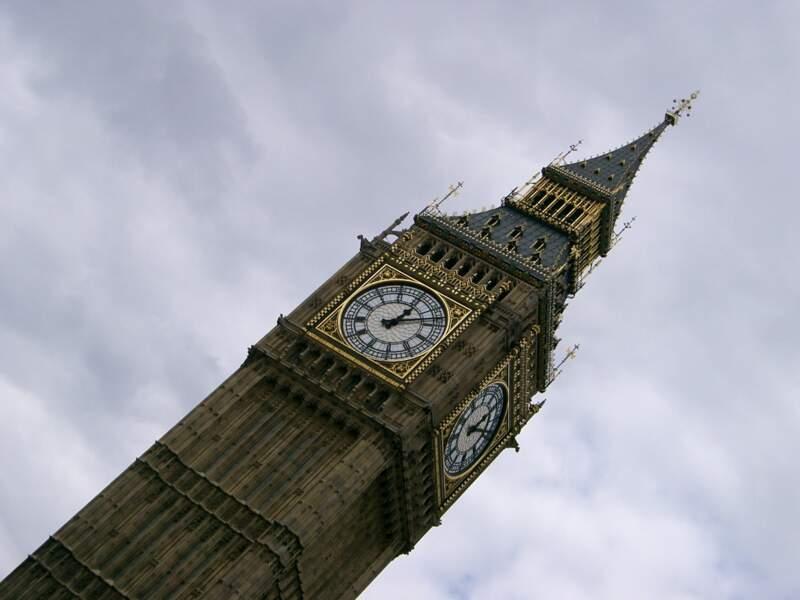
STEP 5/12 After James Bond, his boss. Proudly guarded by a 'bobby', a policeman in an oval helmet, 10 Downing Street has been the home and official office of the Prime Minister of Great Britain and Northern Ireland since the 18th century. The famous black door of this discreet house stands in the middle of Downing Street, barred at both ends. With perseverance, however, passers-by are able to enter the street, after stringent security checks. For the record, "Number Ten", as the British call it, is home to an unusual employee: the "Chief Mouser to the Cabinet Office". A position that has been passed from cat to cat since 1929, and is currently vacant. A cat named Wilberforce holds the record for longevity. The animal served four different Prime Ministers from 1973 to 1987. When she occupied 10 Downing Street, Margaret Thatcher even brought him back from Moscow... a tin of sardines. England will always be England. ¤ London Eye, the next stop, is easily spotted. Cross the river by Westminster Bridge, at the foot of Big Ben.NEXT STEP: London Eye, a glimpse into the future

London Eye, the Millennium Ferris Wheel, London, Great Britain.
STAGE 6/12 The London Eye is also known as the Millennium Wheel. Since the year 2000, this futuristic structure has stood opposite London's landmarks, Westminster Abbey and Big Ben. From the plexiglass capsules that circle the wheel in half an hour, the view of the city is breathtaking. Despite its youth, the history of this wheel is already tumultuous. This symbol of the turn of the millennium and of London's new urban perspectives almost missed its appointment. The wheel, which was assembled horizontally over the Thames, was supposed to be hoisted in 24 hours, but due to problems with the cables, it took four weeks. Fortunately, everything was in order on 31 December 1999, the day it was opened by Prime Minister Tony Blair. To get to Millennium Bridge and the Tate Modern: walk along the riverside path (20-25 minutes), or walk up Chicheley Street to Waterloo station and take bus 381 (to Peckham Bus Station) or RV1 (to Tower Gateway) to the foot of the Tate Modern.NEXT STEP: Millennium Bridge and the Tate Modern, the contemporary Thames

The Tate Modern, London (Great Britain).
STAGE 7/12 For the year 2000, the Thames was definitely spoiled. No new bridge had been built over the river since 1921, until the Millennium Bridge. This steel pedestrian bridge was designed as a symbolic link between the ancient and the modern. From the bridge, the pedestrian can see the side facade of St Paul's Cathedral, built after the great fire of 1666, to the north and the imposing Tate Modern building to the south. The installation of the Tate Gallery's contemporary art collections in this disused power station in May 2000 has brought new life to the Southwark area. The Tate Modern marks the entrance to the new East London, which has been redesigned in recent years through a massive renovation of the docks and industrial buildings. Inside the building, the machine hall has been transformed into a vast exhibition room. A must-see visit.¤ To get to the next stop, the City, cross the Thames via Millennium Bridge or Southwark Bridge, before getting lost in the maze of the City.NEXT STEP: The City, old-fashioned high finance

View of the City of London, Great Britain.
STAGE 8/12All the bridges in the area offer a free show every day of the week. As they leave the office, working girls, traders and other employees escape from the City of London, the financial centre of Europe and the world, in a grand ballet of suits, ties, and often umbrellas (this is England). Some stay in the area and shop in one of the outdated boutiques that dot the City. Unless they sit, sometimes with a cigar (on Fridays), on the terrace or at the counter of one of the countless pubs. All this amidst the buildings and other skyscrapers that are growing like mushrooms, ever higher. Crisis? What crisis? ¤ To get to London City Hall, the next step is to get to the river at Monument tube station and cross over London Bridge, then turn left to walk along the Thames.NEXT STEP: London City Hall, at the pleasure of the architects

The futuristic forms of the London Town Hall in Great Britain.
ETAPE 9/12 Giving nicknames is one of Londoners' favourite pastimes. London's City Hall is no exception: it is known as the bulb, the motorbike helmet, the egg, the woodlouse. The mayor himself, Ken Livingstone, gave it a familiar name: "glass testicle". An architectural oddity designed by Norman Foster, inaugurated in 2002 at the foot of Tower Bridge. A proof that the centre of gravity of the metropolis is moving closer to the river and towards the new districts of the East.¤ Then walk to Tower Bridge, a few dozen metres from the town hall.NEXT STEP: Tower Bridge, the emblem of London

Tower Bridge in London (Great Britain), a universally known symbol.
STAGE 10/12 It needs no introduction. Along with Big Ben, Tower Bridge is the emblem of London. It took eight years, 432 workers and 11,000 tonnes of steel to build this lift bridge, which was at the time (at the end of the 19th century) the longest and most sophisticated in the world. Since 1982, there has been an exhibition on the history and operation of the bridge.¤ To get to Bermondsey: return to the south bank and turn left along the river towards the Design Museum.NEXT STEP: Bermondsey, the new life of the docks

China Wharf, Bermondsey (London, UK).
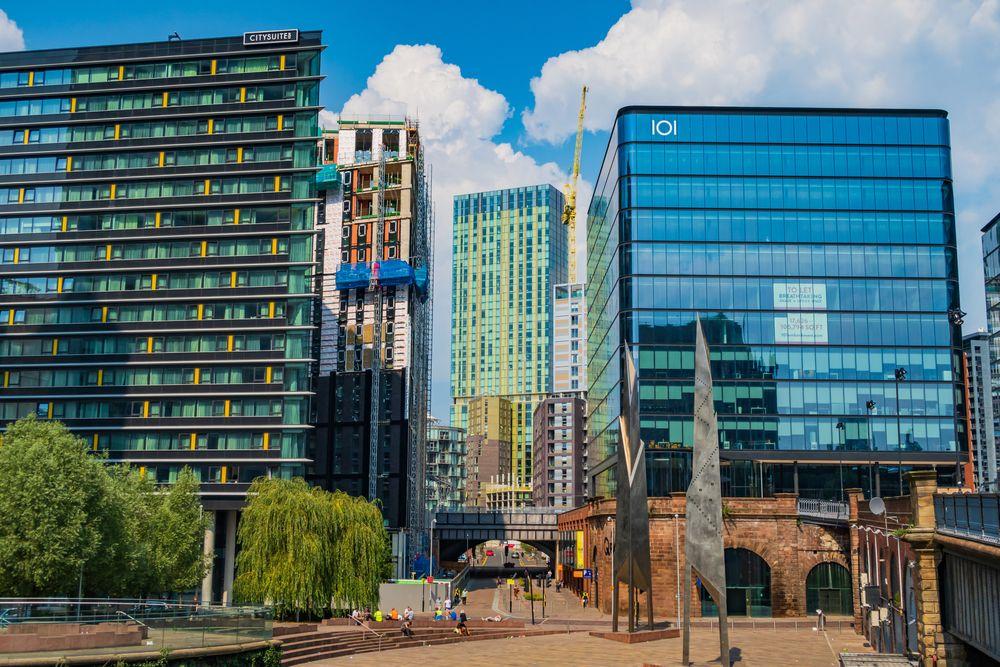
STAGE 11/12 Still off the tourist trail, the Docklands have long been a world away from London life itself. For centuries, this seedy area, mainly frequented by sailors and prostitutes, was left to decay. And just across the road, in the late 19th century, Whitechapel was Jack the Ripper's hunting ground. Today, architectural firms have replaced the seedy rads, and the Design Museum has moved to the foot of the wharfs. A path leads along the south side of the river, crossing a few bridges. It is here that the transformation of London is most palpable. To the east, at Bermondsey, the Thames reminds us that it is a river: the alternating tides are visible. At the bend in the Thames, there is a beautiful view of the city to the west and the river widening to the east. This "New London" has not wiped out the past, and keeps in mind the time when pilgrims embarked for the New World to escape misery. On the quayside, statues of settlers bear witness to this charged history. ¤ As there is no longer a bridge to cross the river, there are two ways to reach the last stage of the walk, Canary Wharf: - The scenic route: return to Tower Bridge, cross the river and take the DLR from Tower Hill station to Canary Wharf - The shorter route: take the Jubilee Line from Bermondsey station and get off at Canary Wharf.NEXT STEP: Canary Wharf, the 21st century City

Canary Wharf, London (Great Britain).
STAGE 12/12 Last stop, Canary Wharf. Here the docks have been transformed into a new business district. An annex of the City, to which Canary Wharf is linked by the Docklands Light Railway (DLR), an automatic overhead metro line. Be sure to arrive on the DLR, which zigzags between skyscrapers and ponds, above the ants in suits. A real anticipation film. Also served by the Jubilee Line, opened for the new millennium, the district represents the London of the 21st century. Further east, the Stratford district is a gigantic construction site, with a view to the next Olympic Games in 2012. To return to the city centre, take the Jubilee Line from Canary Wharf westwards (towards Stanmore). Find our London travel guide and London tips on MyTravellerAnd discover other GEO trips
See also